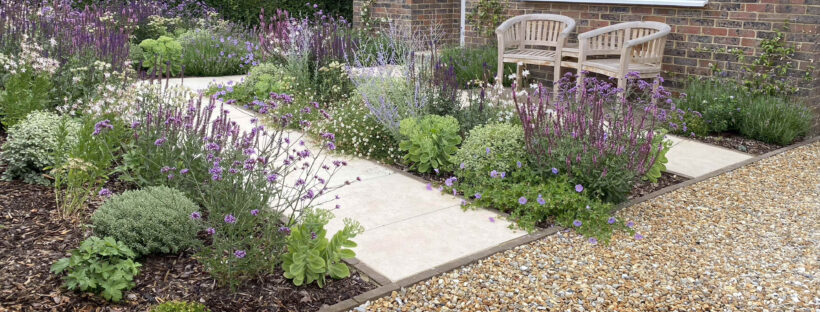
It’s been a full year since I shared the story of my front garden transformation. From an uninspired stretch of concrete to winning First Place in the 2025 Haywards Heath Best Kept Garden competition.
If you haven’t read the original story of how the space was planned, designed, and planted, you can catch up on the full design process here:
👉 Read the Award-Winning Front Garden Design Project Guide
As a garden designer, initial aesthetics are only half the battle. A truly successful landscape design must prove its resilience over time. Following a scorching summer coupled with prolonged hosepipe restrictions, my front garden was put to the ultimate stress test.
Here is how the planting palette coped, what thrived in the extreme heat, and the key practical lessons I learned along the way.
- A Haven for Wildlife & Pollinators (Even in a Drought!)
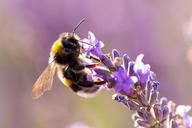
One of the primary goals of this front garden design was to create an ecologically rich habitat. Despite the extreme heat, the garden continues to be a magnet for pollinators, buzzing with bees and butterflies all season long.
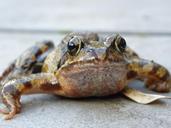 Even more excitingly, the dense canopy of foliage has created a cool, sheltered microclimate beneath the borders. While pottering in the garden recently, I discovered a little frog tucked away under the leaves! It seems to have made itself right at home, often greeting me with a welcoming croak as I sit out enjoying the space in the late afternoon sun. It’s a wonderful reminder that even compact front gardens can become vital sanctuaries for local wildlife when planted thoughtfully.
- The High Performers: Deep Roots & Sun-Lovers
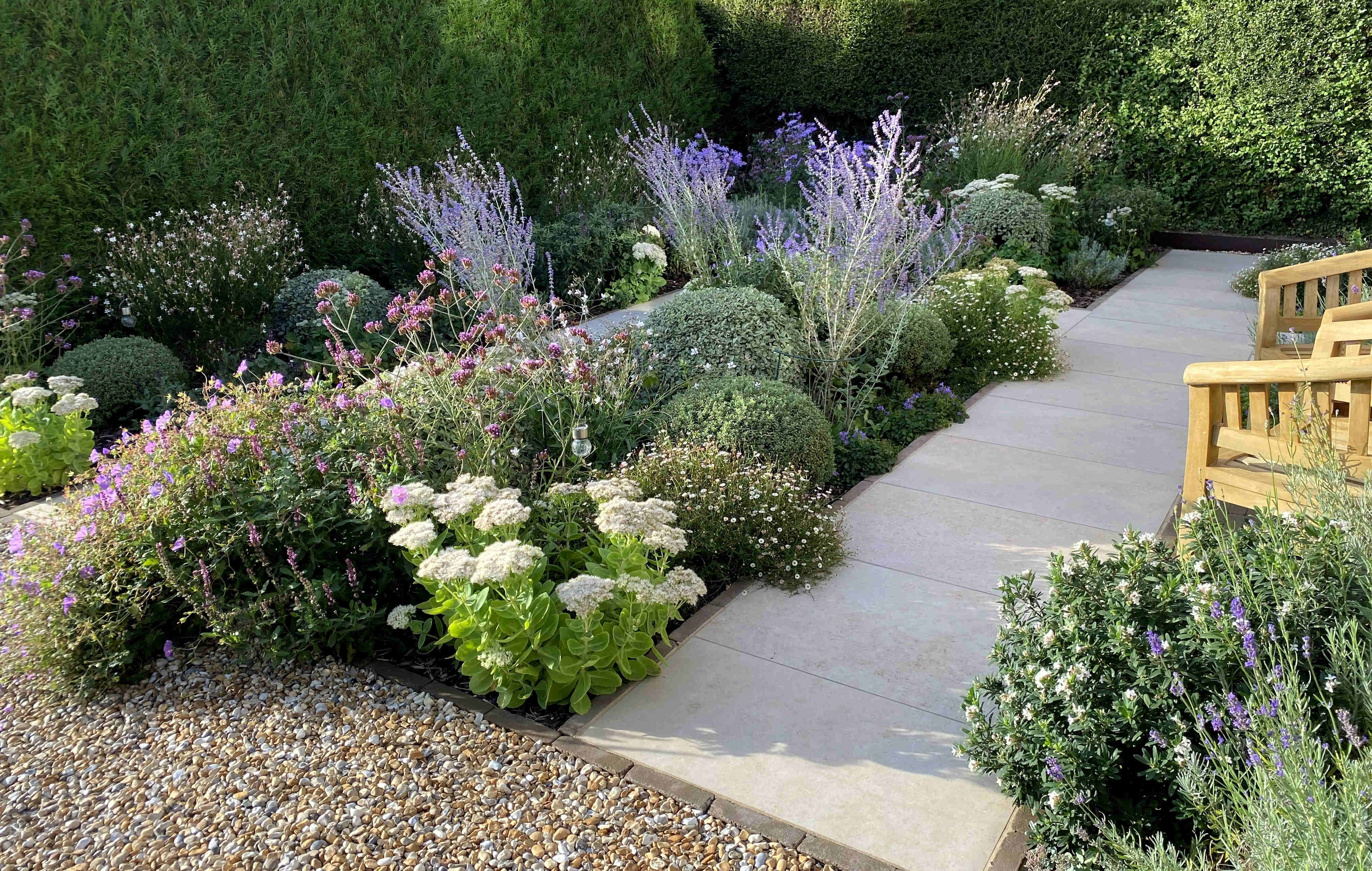
Front Garden September 2026
I was thrilled to see how well the backbone of the garden held up without irrigation.
- Hardy Shrubs: Our evergreen structure, including Hebes, Pittosporum, Daphnes, Lavenders, and Choisya, showed remarkable heat tolerance. Having had a full year to settle, their roots had penetrated deep into the soil profile to find sub-surface moisture.
- Drought-Tolerant Perennials: Sun-loving choices like Salvias, Perovskia, Sedums, Verbena, Erigeron, Campanula, and Gaura sailed through the hottest weeks with barely a sign of stress, proving just how crucial right-plant, right-place design is for climate-resilient gardens.
- The Thirsty Border Plants: Lessons in Moisture & Mulching
Not every plant took the intense sun in its stride. Certain moisture-loving perennials required extra care (and plenty of trips back and forth with a heavy watering can!).
- Anemones & Astrantias: These struggled under the relentless sun. After cutting back spent Astrantia stems early in the season, I used my soil moisture meter (a simple £10 tool that is invaluable during a drought) to test beneath the organic mulch. Even with a generous layer of mulch protecting the borders, the soil underneath was dry.
- The Recovery: Fortunately, thanks to recent late-summer rains, the Astrantias have perked up brilliantly and rewarded us with a gorgeous second flush of blooms! The Anemones are also now flowering well, if not a tad shorter than the previous year’s growth.
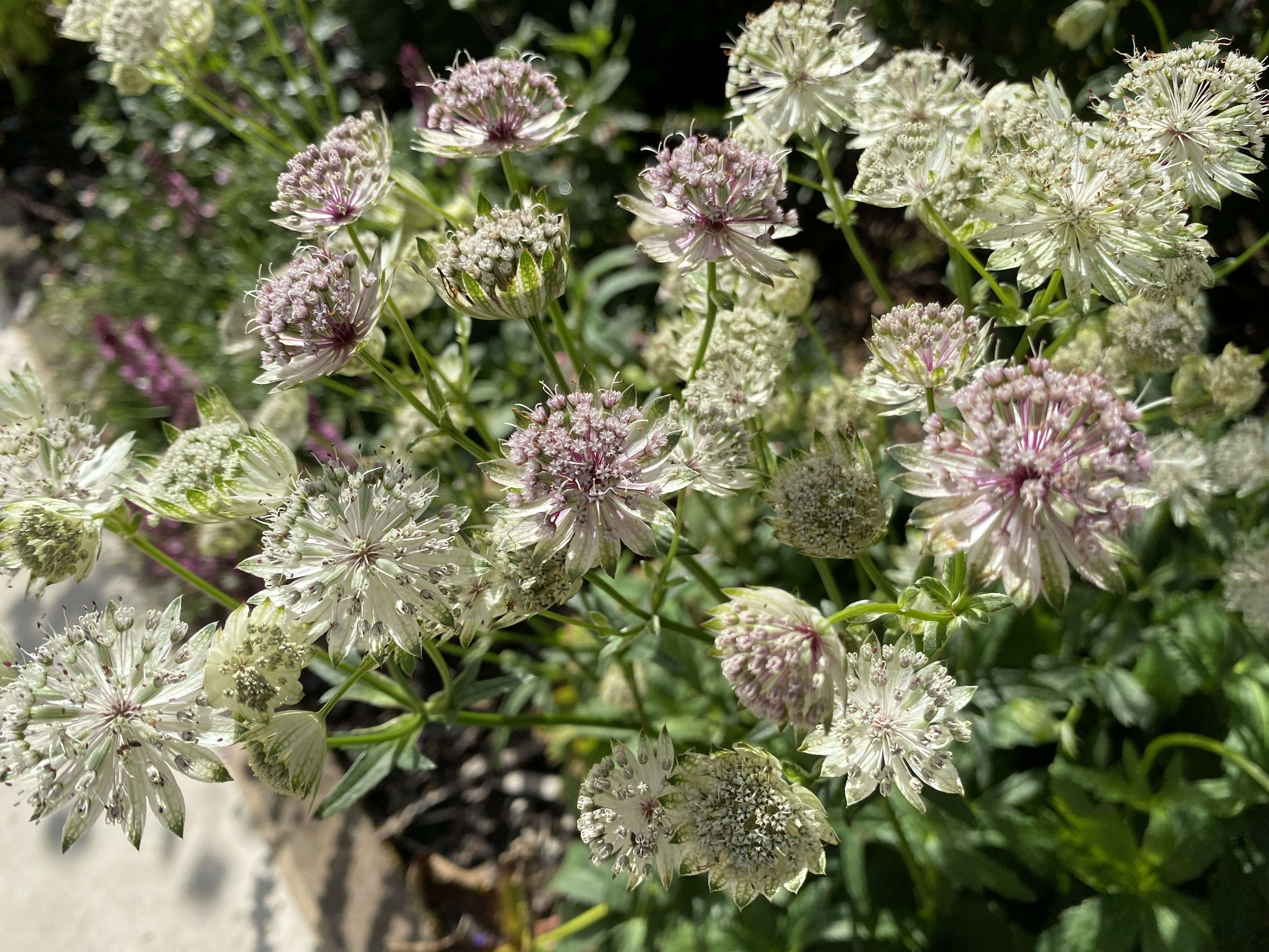
Astrantia’s flowering in September
- Pruning Prudence: Protect Young Growth
One of my biggest takeaways this season came from a simple maintenance job gone wrong:
- The Pruning Mistake: I pruned back a Geranium that was encroaching onto the paved pathway. However, because the sun was so fierce, every time vulnerable young shoots tried to emerge, the intense heat completely scorched them.
- The Lesson: In extreme weather or drought conditions, avoid hard cutbacks. Always leave a canopy of top growth intact to shade and protect young, tender shoots emerging at ground level.
- Seasonal Swaps: Introducing Aster × frikartii ‘Mönch’
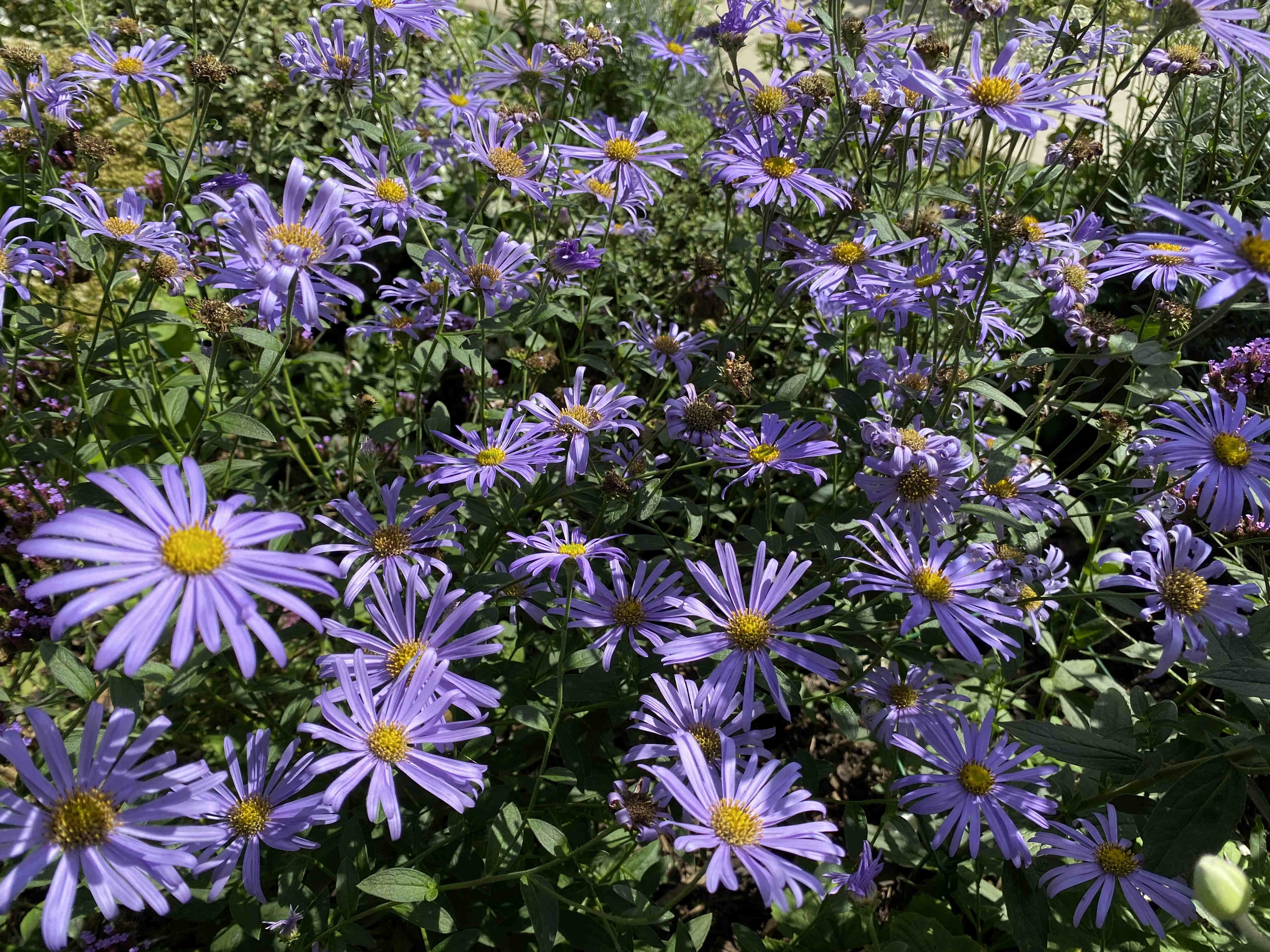
Aster × frikartii ‘Mönch’
Gardens are dynamic, evolving spaces. Over the winter, I lost a couple of Gaura plants. They can be somewhat tender in cold, wet soil, which is why it’s best to leave their top growth on over winter to shelter spring shoots.
I took the opportunity to replace them with Aster × frikartii ‘Mönch’, and what a triumph they’ve been! They have been producing lavender-blue daisy flowers non-stop since July, bringing much-needed colour and late-season pollen well into September.
Planning a Resilient, Wildlife-Friendly Garden for Your Home?
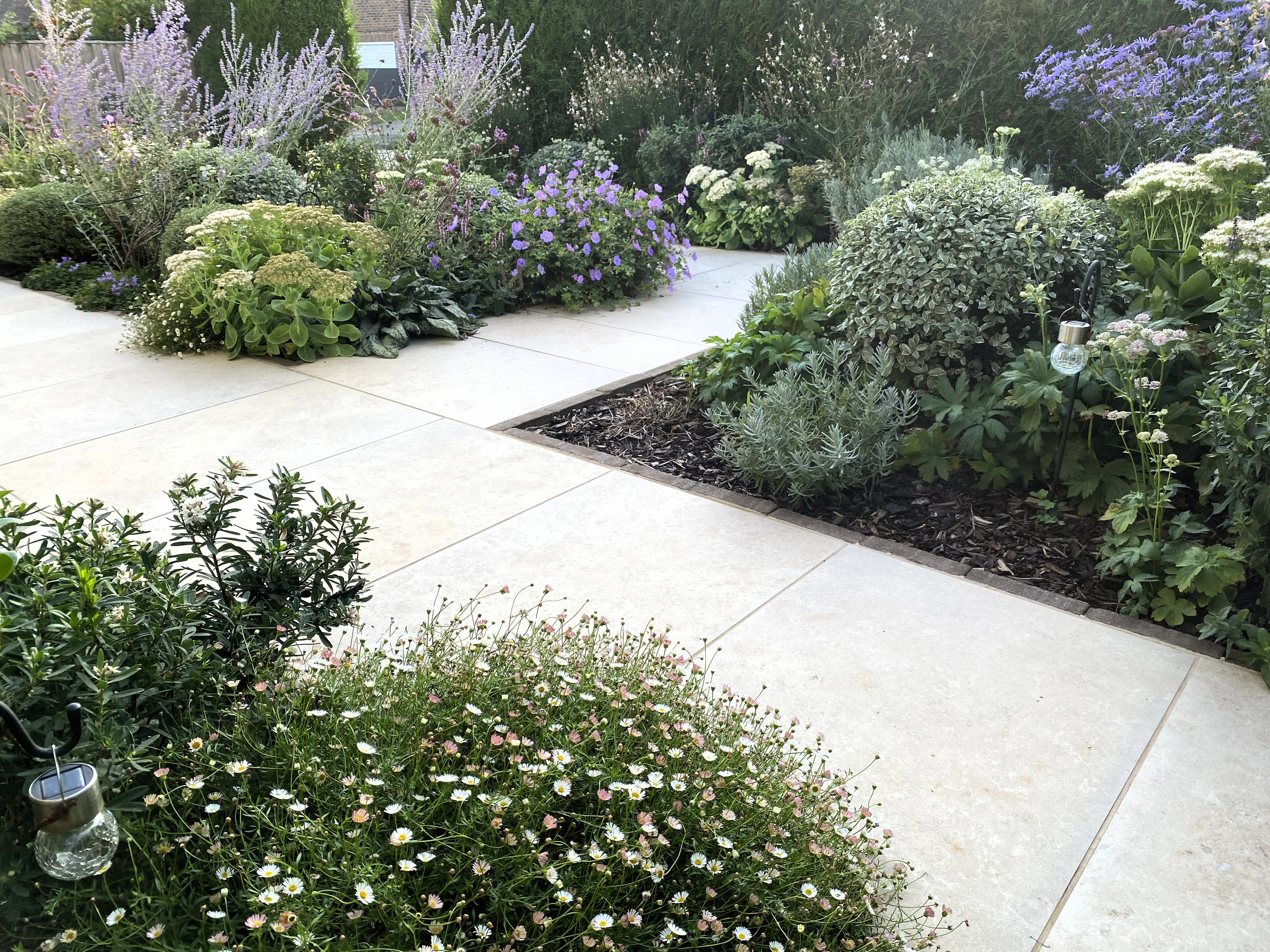
Front Garden September 2026
Designing a garden that looks stunning, stays lush through hot, dry summers, and supports local wildlife requires thoughtful structural planning, clever plant selection, and water-wise landscaping techniques.
Whether you want to overhaul a front driveway or build a drought-proof haven, I’d love to help bring your ideas to life.
- Explore the full photo gallery and structural design details of this project on my Award-Winning Front Garden Portfolio Page.
- Interested in working together? Get in touch today to discuss your garden project.